


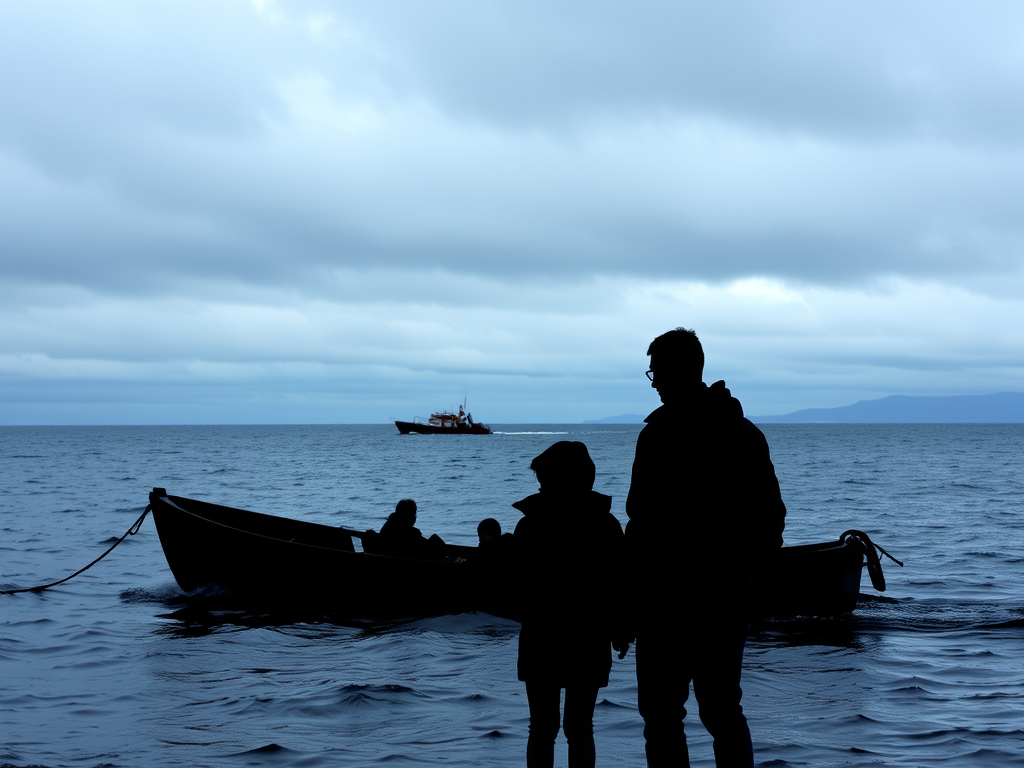
Immigration is rarely out of the news, but the recent UK–France agreement—quickly labelled the “One In, One Out” deal—has generated particularly strong reactions. Supporters see it as a bold step to deter dangerous small-boat crossings across the Channel, while critics argue it’s a small-scale scheme dressed up as a major breakthrough.
As a retired social worker who has worked with families navigating the social care system, I see something different behind the headlines: children and parents caught in the middle of complex policies, trying to find safety and stability in the UK.
What the Deal Actually Means
The agreement, announced in July 2025, sets up a pilot scheme with these key features:
- Returns to France: Some people arriving in the UK by small boat will be sent back to France within days.
- Legal entry in exchange: In return, the UK will accept the same number of vetted asylum seekers from France via a legal route.
- Small scale: It is capped at around 50 people per week—just a fraction of the thousands who cross each year.
- UK-funded: The UK government will cover all transport costs.
On paper, it’s about balancing control with compassion: deterring irregular journeys while offering safer alternatives.
Why It Matters
For Migrant Families: For parents and children on the move, this deal could mean the difference between detention in the UK and starting a new life with dignity. Yet the uncertainty—who qualifies, how quickly decisions are made—adds new layers of anxiety.
For Local Communities: With asylum hotels and overstretched services dominating local debates, some residents hope this scheme will ease pressures. But with such small numbers, communities are unlikely to notice significant change.
For Policy and Politics: The deal signals renewed cooperation between the UK and France after years of tension. Politically, it is being framed as a step toward “fixing” the asylum system, though its practical impact remains limited.
The Concerns and Criticisms
Not everyone is reassured. Charities and legal experts have raised serious questions:
- Human rights risks: Detainees may struggle to access legal advice or appeal their cases in time.
- Effectiveness doubts: With only 50 returns a week, the scheme is unlikely to deter desperate journeys.
- Community frustration: When policies are announced with bold headlines but deliver little visible change, public mistrust grows.
In short, the deal may make for strong political messaging, but it does not address the root causes of why people risk everything to reach the UK.
A Wider Story: Migration and Care in the UK
To truly understand this moment, we need to place it in context:
- The Windrush scandal showed how quickly trust can be broken when migrants are mistreated by the state.
- The use of asylum hotels has created tensions in towns across the country, with local services stretched and migrant families left in limbo.
- Grassroots efforts—from community groups, charities, and faith organisations—have quietly filled gaps, offering hope and practical support where systems fall short.
These broader realities remind us that migration policy is never just about numbers—it is about human lives.
Why Our Voices Matter
Having worked in social care, I know how policies ripple through the lives of families and children. Decisions made in Westminster or Brussels are felt in local schools, GP surgeries, and social services departments. They shape whether a child grows up safe, whether parents feel supported, and whether communities thrive together.
By talking about these issues, we keep sight of the human beings behind the statistics. We also remind ourselves—and policymakers—that compassion and fairness must guide how we respond to migration.
Closing Reflection
The “One In, One Out” deal may be called historic, but in truth it is only a small piece of a much larger puzzle. Migration will continue to shape the UK’s future, and quick fixes will not solve deep challenges.
The real test is not how many boats are stopped, but how we as a society choose to treat those who arrive. Do we see them as problems to be managed—or as families seeking the same safety and opportunity we would wish for our own children?
Behind the headlines, the answer to that question will define the kind of country we want to be.
 Navigating with ZabethJ
Leave a comment