
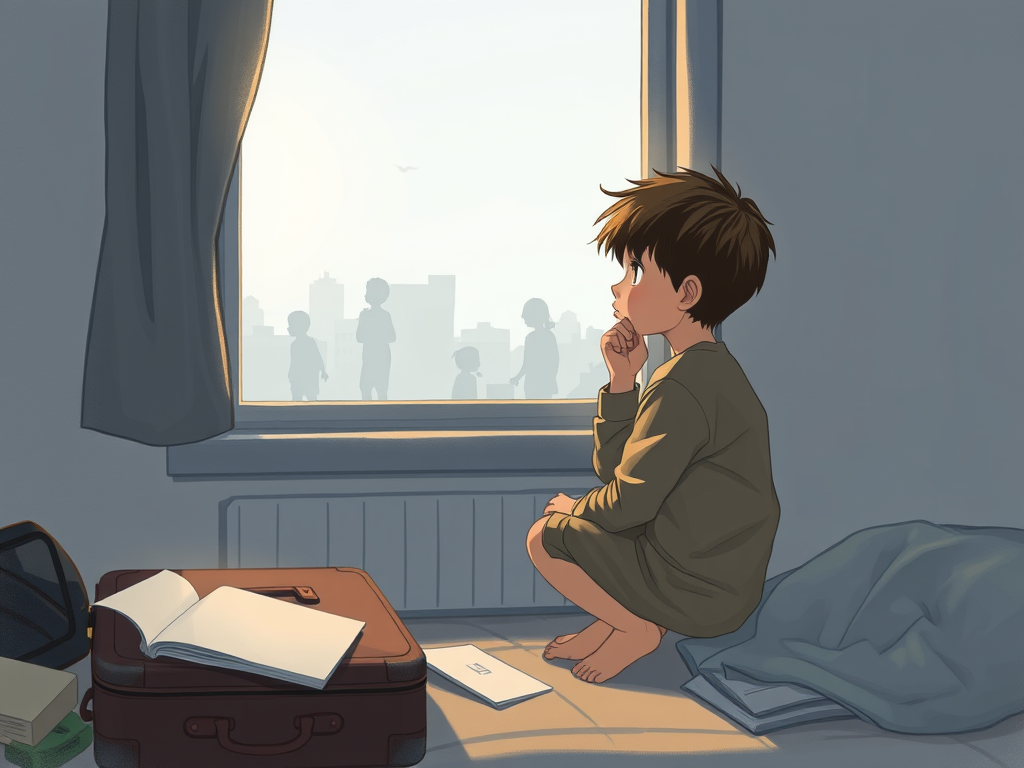
When we talk about asylum policy in the UK, the conversation often focuses on borders, numbers, and systems. But behind every statistic lies a human story — and far too often, that story belongs to a child. Thousands of children live in the shadows of the UK’s asylum system, waiting for decisions that will shape their futures in ways no child should have to imagine.
These are children who have fled war, persecution, and poverty. Some arrive with their families, others alone. What unites them is uncertainty — a kind of limbo where safety feels conditional and belonging feels temporary.
The Hidden Childhoods of Asylum-Seeking Children
According to recent Home Office data, more than 5,000 children sought asylum in the UK last year — many arriving unaccompanied. They come from countries such as Afghanistan, Sudan, Eritrea, and Syria, often after perilous journeys through Europe.
For these young people, arriving in the UK is supposed to mean safety. But the asylum process itself can be another trauma. Children are placed in temporary hotels, moved from one accommodation to another, and left waiting months or years for a decision. During this time, their lives are on hold — education, friendships, and even mental health support are disrupted again and again.
Social workers, teachers, and youth workers describe a heartbreaking reality: children struggling to trust adults after years of displacement; teenagers losing hope because they feel “stuck” in a system that doesn’t see them as children first, but as cases to be processed.
The Age Assessment Controversy
One of the most contentious parts of the asylum system for young people is age assessment. When a young person arrives without documents, the Home Office may dispute their claimed age.
Local authorities then carry out age assessments to determine whether the person is under 18 — a decision that affects everything from housing to education and legal rights. But these assessments are far from straightforward.
Children are sometimes judged as adults based on their appearance or behaviour, with limited consideration for cultural and developmental differences. A 17-year-old boy who has endured trauma, malnutrition, and survival journeys may appear older than he is — but being deemed “adult” can mean being sent to adult accommodation or detention centres, and losing access to child safeguarding protections.
For social workers, these cases are among the most ethically challenging. Balancing child welfare principles with immigration policy demands often leaves professionals feeling conflicted and powerless.
Education: A Right, Not a Privilege
Education should be a stabilising force for all children, but for asylum-seeking children in the UK, it is too often a privilege rather than a guarantee.
Delays in school placements, frequent relocations, and a lack of specialist English language support make it difficult for children to settle and thrive. Some are excluded from mainstream education entirely, attending temporary tuition centres or waiting months before a school place becomes available.
Yet, when given a chance, these children show extraordinary resilience. Teachers describe pupils who arrive speaking little English but quickly excel when supported — not just through academics, but through understanding and inclusion.
Simple acts — a teacher who learns how to pronounce a child’s name correctly, a classmate who offers friendship, a school that celebrates cultural diversity — can restore a sense of normality and hope.
Mental Health and the Weight of Waiting
The emotional toll of seeking asylum cannot be overstated. Children carry the trauma of what they have fled, compounded by the stress of an uncertain future.
Mental health professionals report high rates of anxiety, depression, and post-traumatic stress among asylum-seeking children. Yet specialist support is scarce, particularly for those placed in temporary accommodation far from services.
The “hostile environment” created by UK immigration policies adds another layer of fear. Children overhear their parents worrying about deportation, struggle to understand letters from the Home Office, and internalise the sense that they are unwanted guests.
As one teenage asylum seeker recently told a charity worker: “I came here to be safe. But I don’t feel safe until they say I can stay.”
Unaccompanied Minors: Alone in a Complex System
For unaccompanied asylum-seeking children, the challenges multiply. Without parents or guardians, they rely entirely on the state for care and protection. Local authorities become their “corporate parents,” yet funding pressures and placement shortages mean many end up in semi-independent accommodation far too young.
These children need more than just a roof over their heads. They need consistent adults who advocate for them, access to education and legal support, and a chance to build community connections.
When the system works, it can be transformative — a good foster placement, a compassionate social worker, or a dedicated advocate can help a child rebuild trust and belonging. But when it fails, the consequences can be devastating, leading to exploitation, isolation, or mental health crises.
Policy at a Crossroads
Recent government changes — such as the Nationality and Borders Act and the Illegal Migration Act — have made the landscape even more complex. The new laws risk criminalising those who arrive via “irregular routes,” even when they are fleeing war or persecution.
Charities and social care professionals have warned that these policies could push more children into hiding, deter families from seeking help, and undermine the UK’s obligations under the UN Convention on the Rights of the Child.
At the heart of this issue lies a moral question: Do we treat asylum-seeking children as children first — or as migrants first?
Building a Kinder System
If we are serious about protecting children, we must design asylum policies that reflect compassion, fairness, and child-centred values. That means:
- Faster, trauma-informed decision-making to reduce uncertainty.
- Safe and stable housing that prioritises children’s welfare.
- Access to education from day one, with proper language and emotional support.
- Independent advocacy and legal representation for all unaccompanied minors.
- Training for professionals in trauma-informed practice and cultural sensitivity.
Ultimately, the measure of a society is how it treats its most vulnerable. Right now, too many children are living in the shadows of the UK asylum system — unseen, unheard, and unsure of their place in the world.
It’s time to bring them into the light.
🫶 Help and Support: Resources for Asylum-Seeking Children and Families in the UK
If you or someone you know is navigating the UK asylum system — especially with children involved — there are trusted organisations offering free advice, emotional support, and practical help.
1. Refugee Council
🌐 http://www.refugeecouncil.org.uk
Provides specialist support for unaccompanied asylum-seeking children, young refugees, and families. Offers advocacy, education access, and integration support.
2. Migrant Help
🌐 http://www.migranthelpuk.org
Free advice and guidance on asylum claims, housing, and welfare issues. Operates a 24/7 helpline for people seeking asylum: 0808 8010 503.
3. The Children’s Society
🌐 http://www.childrenssociety.org.uk
Supports young refugees and migrants through legal advice, safeguarding, and mental health services. Campaigns for fairer policies for children on the move.
4. Coram Children’s Legal Centre
🌐 http://www.childrenslegalcentre.com
Offers free legal information and representation for migrant and asylum-seeking children. Helps with age disputes, family reunification, and education rights.
5. Barnardo’s
🌐 http://www.barnardos.org.uk
Runs specialist services for children seeking asylum, including counselling, family support, and anti-trafficking programmes.
6. British Red Cross – Refugee Support
🌐 http://www.redcross.org.uk/get-help
Provides emergency essentials, emotional support, and advice on accessing healthcare and reuniting with family members.
7. Refugee Education UK (REUK)
🌐 http://www.reuk.org
Focuses on helping refugee and asylum-seeking children access and progress in education, offering mentoring and training for educators.
8. Right to Remain
🌐 http://www.righttoremain.org.uk
Publishes an excellent free “Asylum Navigation Board” and Toolkit explaining each step of the UK asylum process in clear, accessible language.
💬 If You’re a Professional
Social workers, teachers, or charity volunteers supporting asylum-seeking families can also access specialist training and toolkits through:
- The Refugee Council’s Training Hub
- CoramBAAF (British Association for Adoption and Fostering)
- Migration Observatory (University of Oxford) for data and briefings on asylum trends.
 Navigating with ZabethJ
Leave a comment